

Six days can make a focused northern-circuit safari, but the cost depends on how the journey is shaped. A 6-day Tanzania safari’s price varies with its route, travel season, accommodation and party size, and is provided after a quote request.
It’s reasonable to want a clear picture before choosing dates or stays. This guide explains how the northern circuit can fit into six days, what kinds of accommodation to expect and how migration timing influences the Serengeti route. You’ll also see why the balance between driving time and wildlife viewing matters when planning a compact safari.
Key Takeaways
- See what makes six days a practical but carefully paced safari, including the role of a Ngorongoro Crater visit.
- Understand how parks fit into a northern-circuit itinerary and where travel time shapes each day.
- Compare lodge and tented camp stays to find the accommodation style that suits your journey.
- Use the migration’s seasonal movement to guide your Serengeti timing, with different areas coming into focus at different times of year.
Is it recommended to do a 6-day safari in Tanzania?
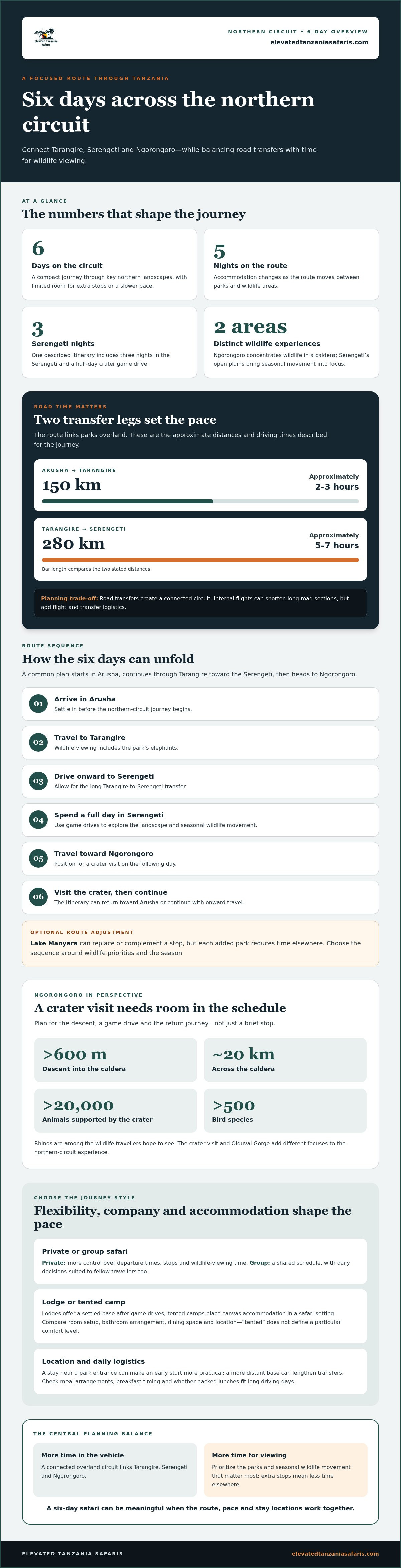
Six days can cover key northern-circuit landscapes, including the Serengeti and Ngorongoro. The main trade-off is time: road transfers and wildlife viewing must share a compact schedule.
Ngorongoro Crater and Olduvai Gorge Visits
In the Ngorongoro Conservation Area, the crater visit brings you down more than 600 meters into a caldera about 20 kilometers across. Allow time for the descent, a game drive and the return journey, rather than treating the crater as a brief stop. Olduvai Gorge adds a different kind of visit, with an archaeological landscape alongside the area’s wildlife and scenery. Together, these stops give the itinerary more than one focus.
Serengeti and Ngorongoro Wildlife
Ngorongoro Crater supports over 20,000 animals and more than 500 bird species, with rhinos among the wildlife travellers hope to see. In Serengeti, game drives look across a much broader landscape, where wildebeest movements shift with the season. The two areas complement each other: the crater concentrates wildlife within a caldera, while Serengeti’s open plains make seasonal movement central to the experience.
Road transfers suit a connected circuit through Tarangire, Serengeti and Ngorongoro. Internal flights can shorten long road sections, but add flight and transfer logistics. Choose based on whether you prefer a continuous overland journey or less travel time between areas.
Visa requirements depend on your passport nationality and trip purpose. Vaccination planning depends on your health history, previous immunizations, route and season. Travel insurance should cover medical treatment and evacuation during remote safari travel.
A six-day itinerary can include three nights in the Serengeti and a half-day game drive in Ngorongoro Crater. This allows meaningful time in both areas, but leaves limited room for extra stops or a slower pace.
Pack binoculars for viewing distant wildlife and lightweight layers for changing conditions between parks. Keep travel documents, sun protection and any personal medication accessible during transfers rather than buried in your main luggage.
Six-day northern Tanzania safari itinerary
A six-day route can connect Tarangire, Serengeti and Ngorongoro, with driving time shaping each day. The best sequence depends on your wildlife priorities and the season.
Northern Circuit Itinerary Options
A common plan begins in Arusha, then travels through Tarangire towards Serengeti National Park and Ngorongoro. Arusha to Tarangire is about 150 km and takes approximately two to three hours; Tarangire to Serengeti is about 280 km, with five to seven hours of driving. Lake Manyara National Park can replace or complement a stop, but each added park reduces time elsewhere.
- Arrive in Arusha and settle in before the circuit begins.
- Travel to Tarangire for wildlife viewing, including its elephants.
- Drive onward to Serengeti National Park, allowing for the long transfer.
- Use a full day for Serengeti game drives and seasonal wildlife movement.
- Travel towards Ngorongoro, then visit the crater on the following day.
- Return towards Arusha or continue with onward travel.
A season-led route can position Serengeti nights near relevant wildlife movement; explore northern circuit safari planning as you shape the sequence.
Private and Group Safari Choices
A private safari gives your party more control over departure times, stops and wildlife-viewing time. A group safari follows a shared schedule, so daily decisions must work for fellow travellers too. On a six-day route, consider how each format handles the long Tarangire-to-Serengeti transfer and whether flexibility matters more to you than travelling with others.
Parks Included in the Itinerary
Tarangire National Park, Serengeti National Park and the Ngorongoro Conservation Area make up a focused northern circuit. Lake Manyara National Park is another possible stop, but including it means adjusting time elsewhere. The Ngorongoro Crater is within the Conservation Area, not a separate national park. Choose destinations around your priorities, such as elephants in Tarangire or migration timing in the Serengeti.
What kind of accommodations can I expect?
A six-day safari usually means five nights on the northern circuit, with accommodation changing as the route moves between parks. Lodges and tented camps offer different settings, while their locations affect how the day’s drives fit together.
Lodges and Tented Camps
Lodges offer a settled base after game drives, while tented camps place canvas accommodation in a safari setting. “Tented” describes the structure, not a particular comfort level, so compare the room setup, bathroom arrangement, dining space and location. A camp near Serengeti wildlife areas may suit a migration-focused route, while a lodge near Arusha can work well around arrival or departure.
Ask how meals fit the daily schedule. Breakfast timing matters when an early departure is planned, and packed lunches can help on long drives between parks. Dinner arrangements also shape the evening after a full day outdoors. Treat meal inclusions as part of the accommodation details rather than assuming every stay follows the same plan.
Accommodation Tiers and Locations
Accommodation options differ in setting, room style, facilities and service, not just appearance. Compare each stay with your priorities: a quiet place to rest, convenient access to the next park, or a camp positioned for seasonal wildlife movement. In Tanzania, the route can include nights around Tarangire, the Serengeti, Ngorongoro or Lake Manyara.
Accommodation location can save time or add driving. A stay near a park entrance may make an early start more practical, while a more distant base can lengthen transfers. On a five-night circuit, changing accommodation follows the route. Consider how often you want to unpack alongside the wildlife areas you hope to explore.
For a balanced choice, compare each night’s location, meal plan and room arrangement together. A tented camp near the Serengeti may suit a season-led itinerary, while a lodge near Ngorongoro can position you for a crater visit. Accommodation is part of the safari’s pacing, not simply a place to sleep.
Serengeti game drives and Great Migration
For a six-day route focused on the Great Migration, plan Serengeti nights in the region that matches your travel season. Southern Serengeti is associated with migration activity from December to March; the Northern Serengeti is the focus from August to October.
Game Drives and Overnight Stays
Plan three nights in Serengeti National Park to allow time for game drives and travel between areas. From June to October, the itinerary can include one night in central Serengeti and two farther north; from January to March, it can include one central night and two in the south. These seasonal choices shape where you wake up and how much time you spend reaching wildlife areas.
Overnight location matters as much as the number of game drives. Staying nearer your intended viewing area can reduce backtracking, while a central base offers a broader range of routes. Discuss the daily balance between driving and time on the plains when shaping your itinerary.
Wildlife Viewing and Migration Routes
Serengeti National Park has landscapes ranging from open plains to varied habitats, offering wildlife viewing beyond migration herds. Game drives may look for predators and other animals as well as wildebeest, with routes shaped by seasonal movement. The migration’s position shifts, so choose northern or southern nights according to the season and your priorities.
A six-day safari leaves limited room for repeated long transfers across the park. Keeping your nights in one seasonal region can preserve game-drive time, while a central night offers a transition between areas. No route guarantees a particular wildlife sighting; the goal is to match the itinerary to seasonal patterns.
An optional hot-air balloon ride offers a different view of Serengeti’s plains and landscapes from above. It adds an early-morning activity alongside, rather than in place of, a vehicle game drive. If migration timing is central to your plans, plan a migration-focused Serengeti safari around the region and season you want to explore.
Elevated Tanzania Safaris: 6-Day Tanzania Essential Safari
Elevated Tanzania Safaris offers the 6-Day Tanzania Essential Safari for travellers who want a considered northern-circuit journey shaped around their priorities. Its private, tailor-made approach brings together a specialist, private guide and vehicle, with season-led routing to help align park visits and overnight stays.
Turn to this option when you’ve settled on a six-day timeframe and want the route, accommodation and wildlife focus considered as one plan. Travellers prioritising migration can explore the Great Migration or Calving Season offerings; those wanting more time beyond the circuit may consider the 12-Day Luxury Tanzania Safari & Zanzibar Honeymoon.
Contact Elevated Tanzania Safaris to discuss your itinerary and travel priorities.
Shape the Journey Around What Matters Most
Planning a six-day Tanzania safari becomes more straightforward when you decide what you want the journey to feel like, not only which places to include. Consider whether you prefer a measured pace, a particular wildlife focus, or more time for quiet observation. Those priorities help shape the choices that turn an itinerary into a personal experience.
Elevated Tanzania Safaris can help translate those preferences into a thoughtfully arranged route. Its safari options include the 6-Day Tanzania Essential Safari, the 12-Day Luxury Tanzania Safari & Zanzibar Honeymoon, and Great Migration experiences. The right starting point is the travel style and timing that matter to you.
Share what you hope to experience, and let the planning begin with a clear conversation. Contact Elevated Tanzania Safaris to discuss your safari plans. A considered beginning makes room for a journey that feels distinctly your own.
Frequently Asked Questions
How much will this safari cost?
The total safari cost depends on the route, travel dates, accommodation and party size; you’ll receive a price after requesting a quote. For a useful estimate, first decide whether migration timing or a broader northern-circuit journey matters more. Then consider the number of nights in each location and the accommodation level, as these choices shape the itinerary and its overall cost.
Which animals can I expect to see?
Wildlife varies by habitat and season. Possible sightings include elephants in Tarangire, wildebeest on the Serengeti plains, and lions, leopards and rhinos across the circuit. The Big Five refers to five wildlife species, and Serengeti National Park is home to all five. Notice how the scenery changes between open grassland, wooded areas and the Ngorongoro caldera, each offering a different setting for wildlife viewing.
What is the best 6-day Tanzania safari itinerary?
A balanced itinerary links Tarangire, the Serengeti and Ngorongoro, with the order shaped around your arrival and departure plans. Allow enough time for Serengeti game drives, then plan the crater visit without pairing it with an exhausting transfer. If Lake Manyara is a priority, decide which stop should receive less time. Adding parks without adjusting the pace can make the journey feel rushed.
How much does a 6-day Tanzania safari cost per person?
The per-person cost depends on the itinerary design and the number of travellers sharing its private arrangements. Route, travel season, accommodation and party size all affect the individual estimate. Compare more than the headline total: review the number of nights, the location of each stay and the itinerary inclusions to understand what the per-person figure covers.
What is included and excluded in Tanzania safari packages?
Elevated Tanzania Safaris’ private journeys include a specialist, private guide and vehicle, and season-led routing. The specific itinerary determines the remaining inclusions and exclusions. Review its cost breakdown for accommodation, meals, transfers and park-related charges, and distinguish these arrangements from personal spending or international travel. This helps clarify which parts of the journey the package covers.
What are the park fees for Serengeti, Ngorongoro, Tarangire, and Lake Manyara?
There is no single fee total for all four destinations. The amount depends on which parks the itinerary visits and how those visits are arranged. Review each planned entry for the Serengeti, Ngorongoro, Tarangire and Lake Manyara separately rather than treating them as one combined charge. This helps show how the route affects the park-fee portion of your safari budget.